

Real-world experiments for intelligent machines
We give robotics teams the lab and operational support to turn research questions into physical experiments.


The physical side of AI
Progress in robotics depends on what happens outside the model
Understanding how a robot moves an object, recovers from a mistake, and works in changing conditions takes time with real hardware. Coop brings the equipment, physical setup, and day-to-day lab operations together, so your team can focus on the research.
Experiments at Coop
A closer look at what your robots can do
Start with the question your team needs to answer. We’ll shape the experiment around it.
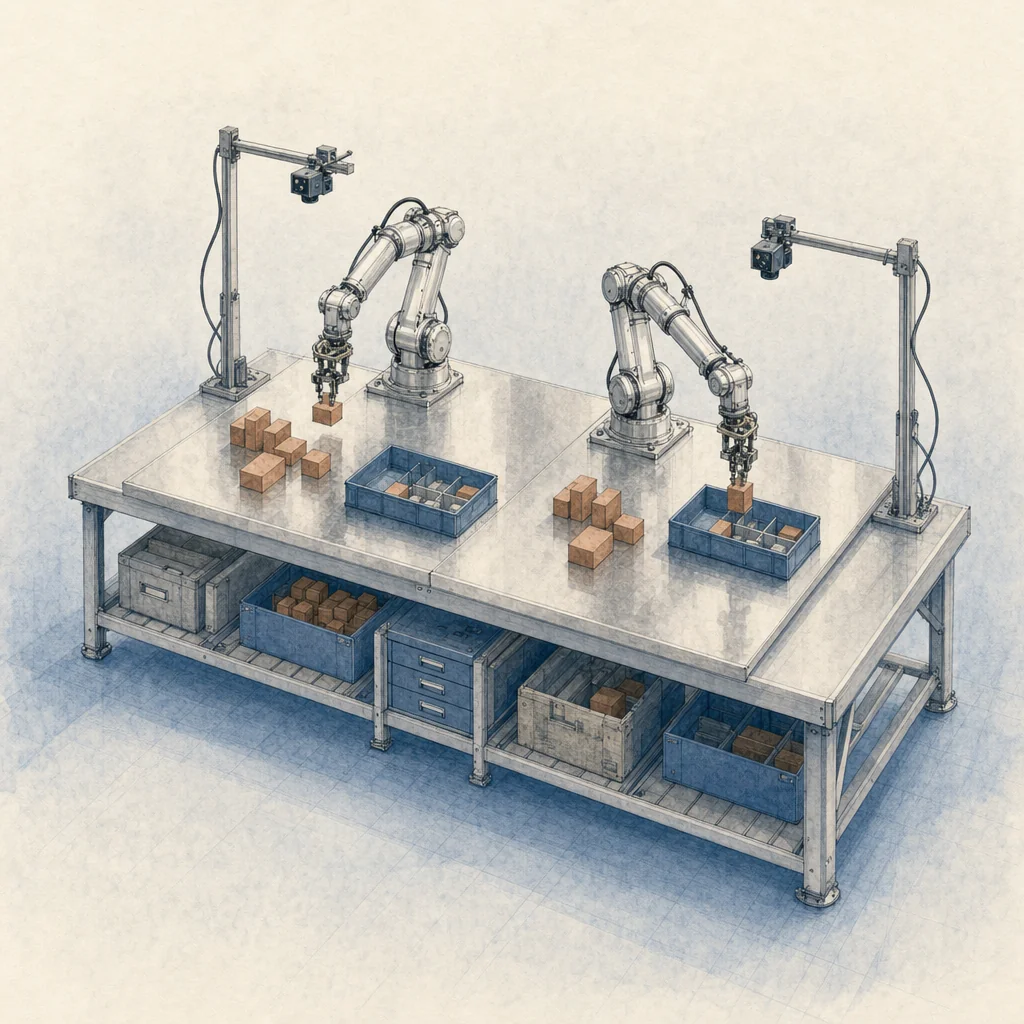
Understand how your policy behaves on a real robot
Compare versions across the same tasks, objects, and starting conditions. Build a clearer picture of what improved, what regressed, and what to investigate next.
- What we vary
- Policy version, task, or operating condition
- What you review
- Trial recordings, outcomes, and failure cases
Working with the lab
An extension of your research team
From an initial question to a set of runs you can learn from, we manage the physical work at every stage.
01Define the experiment
We work with you to choose the task, hardware, conditions, and success criteria. The scope and outputs are agreed before the first trial.
02Run the physical work
Our team handles the setup, execution, and resets. We keep track of the conditions and capture the behavior that matters to your question.
03Review and iterate
Review the recordings, results, and failure cases with your team. Use the evidence to decide what to change and what to test next.
From the Coop team
Research & insights
Perspectives on robotics, experimental practice, and the work of building a physical lab.
Visit the journal